Showing posts with label language learning. Show all posts

Saturday, April 21, 2018

Goodbye Cards: A Cute, but Worrisome, End

I thought there were no victims, only laughs, when I ironically
taught them the worst Valentine's Day poem. Little did I know
it would come back to haunt my last memories of Martinique.
As I mentioned in my last post, my experience in Martinique was cut short due to a family emergency. For my of my classes, my announcement - in French - that I was leaving (as well as the fact that I could speak French) was a surprise. However, one of the teachers in one of my CM2 (11-12 year old) classes told them ahead of time that I was leaving and gave them some time to make me cards. The results are adorable and ... enlightening. In a troubling way. I thought I had been doing a fairly good job of teaching English, but their creative gifts, while adorable, suggest otherwise.


First, I was suddenly made aware of the fact that I never actually wrote down my name for them, but I stubbornly pronounced it in English, rather than how a French person would pronounce it. Apparently my students had widely varying ideas of what my name actually was.


Secondly, only on my last day did I realize that I had taught them all how to say, "I'm in love," but never, "I love you."

Third, while we did go over how to express that one feels ill oneself, we never discussed the right thing to say when someone else is ill. Apparently, their teacher googled it and came up with, "We wish your [relative] a speedy recovery." Some of the students, like the one's whose work is featured just above, got that more or less down. Others struggled a little more and came up with much funnier sentiments.


What I really hadn't expected was that, for many students, the correct way to say goodbye to an American assistant was to draw her homeland's flag.


As in the above case, for many of them, "United States of America" seems like some sort of blessing. Is this the over-estimation of globally-reproduced American culture? A response to perceived homesickness? A middle-schoolers best guess? I don't know, but it's both sweet and funny.

As I mentioned yesterday, most of my students really don't
have it down that the U.S. and the U.K. are separate
countries.

For context, "passe" is the verb one would use in the French
sentence roughly equivalent to "Have a good day."
I think he just wanted to prove he knew a bonus word in
English. Or maybe "lake" has a special place in his heart. 
"Coucou" is a cutesy greeting that isn't really what kids are
supposed to say to their teachers.
"I wish your [grand]ma well / I love
you? you / Rose are red / I love you
with all my heart."


Finally, their artistic exercise reminded me that middle schoolers are really fucking naive. When they made these cards, they didn't know I spoke French. But most of them still used French on there somewhere. Allow me to emphasize, they were all 100% stunned that I knew any French at all. Yet it never occurred to them that if they wrote in French I wouldn't be able to appreciate it. Luckily, I can appreciate it, because it's really fucking cute.
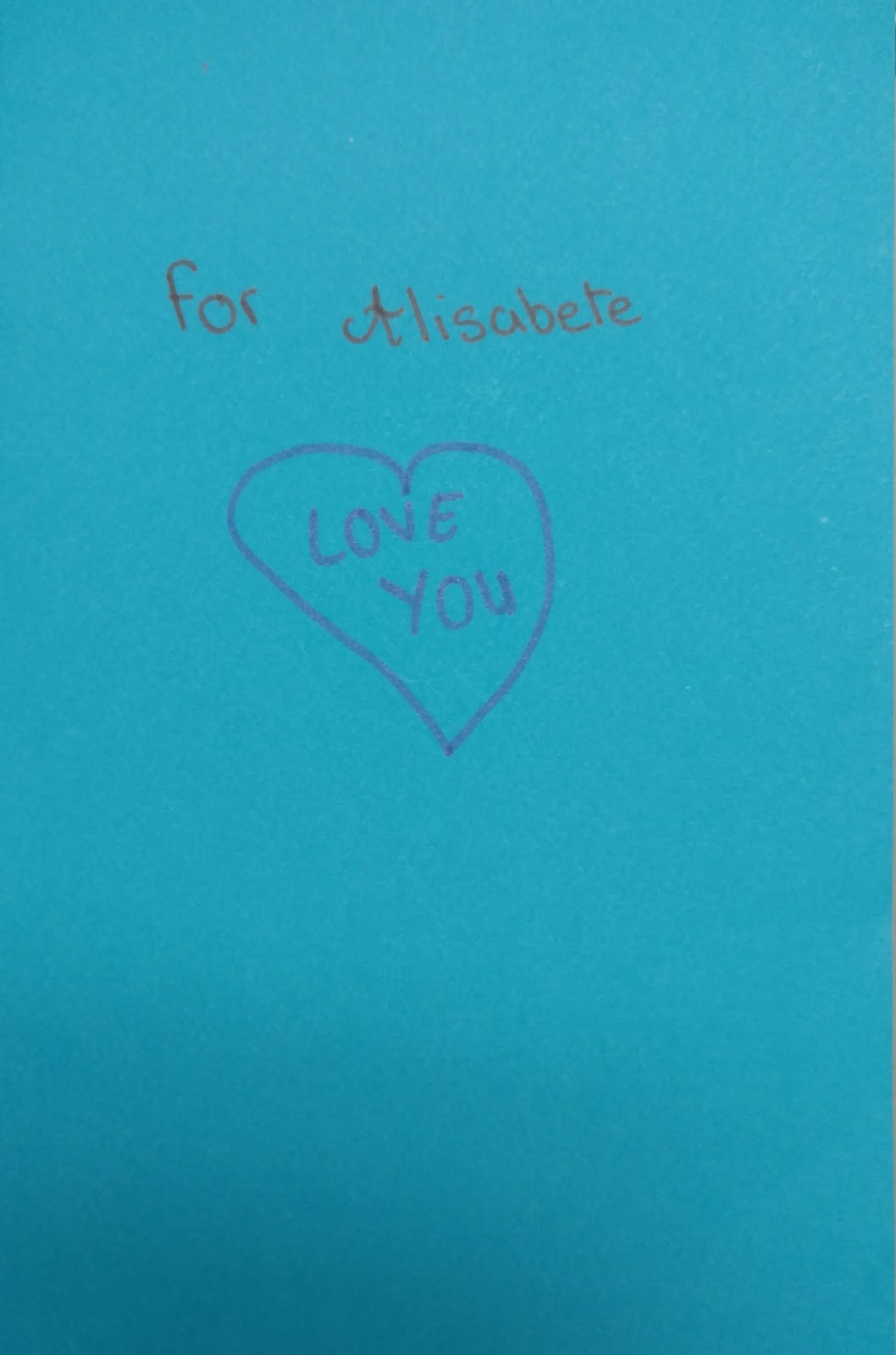

In the end, the only good thing about being in Martinique, besides a few interesting cultural and natural quirks, has been my students. Kids give me the energy to work, and they're honestly the only humans I'll agree to work with for any extended period of time. They're the only thing I think I'll miss about Martinique - shocker, not even the buses make the list. I'm honored to have these little reminders of the fun we had together.


Tuesday, November 28, 2017

Cultural Preservation: You were so busy asking yourself if you could that you failed to ask yourself if you should (or by what discursive means you might)

During creole class yesterday, the class read an excerpt of Maupassant translated into Martinican creole. The professor mentioned in passing that many of the phrases were clunkier in creole because creole is not yet "enriched" enough to express many literary ideas He often mentions that creole was developed in plantation fields and not, as of yet, in salons, so it vocabulary and usage are necessarily less superfluous. However, this time he used a phrase that struck me: translations between European languages are horizontal, but translations from European languages into creole are vertical.
Of course, every fiber of my being revolts at the implication that any language is "lower" than another. First of all, some people, especially those who favor more "primitive" aesthetics (a term whose usage here should not imply a lack of criticism), might prefer the long phrases that use simpler words to express complex emotions or ideas. More importantly, though, creole has a smaller vocabulary and fewer usage patterns for a reason (or a few), and it's worth exploring why.
Creolophone Martinicans are working quickly to codify their language, to work out in writing its grammar, orthography, and idioms. A few teachers I know are on teams that study particular issues in grammar to determine the "correct" usage to be written down and published. Creole organizations regularly host dictation contests (what could be more French!) in which creolophone guests are challenged to write down what they hear in "correct" creole. The authorities on correct creole (including my professor) tend to be authors of works, either original or collected folklore, printed in creole. 
Why such an effort? Well, of course, on this island there is a dominant and an oppressed culture. The dominant culture in French, in terms of finances, in terms of social authority, in terms of government authority, and, most obviously, in terms of cultural pretension. Can you even conceive of a people more stuck up about their own cultural achievements? In such an atmosphere, creolophone Martinicans, and creolophones around the world, appear to have two options: aggressively codify, put into writing, and sharpen your creole, or watch it be completely overtaken and disappear, replaced completely by the dominant language.
In this particular case, the dominant language has a real ax to grind about "correct" language, too. Everybody knows that the Académie française dictates what is and is not "correct" French, and has been doing so for a few centuries now. What many people do not appreciate is that the French people haven't been speaking French for nearly as long. Even as the French tried to impose French on Arab subjects in Algeria in the Nineteenth Century, many people in the mainland, out in the countrysides neighboring other countries, spoke what we might curiously call a mix or accurately call a different language. Through schooling and various other arms of the government, the French administration developed a state-run linguistic Leviathan to impose "correct" French on its own citizens. Nowadays French speakers feel pressured by encroaching anglophone culture - and post-colonial immigrant cultures cultures, too - and react by fighting to "preserve" their "correct" language, from anglicisms, from creolization, from foreign vocabulary, you name it. How could we expect creole to stand up against the full machinery of a paranoid culture that feels its fetischized culture and language threatened by an outside enemy, mobilized to preserve some fleeting, esoteric ghost of its own authenticity, trained in the battlefields of national development of the 1800s?
So creolophones have to choice but to buckle down and preserve their language from the aggressive slip into French - recording and decimating creole vocabulary so that speakers don't pepper their creole with French words, memorializing and enforcing creole grammar so that speakers don't just speak French sentences filled with creole words, and distinguishing and banishing any in-between forms of usage. If they don't, they know their language will be replaced, and no one will be able to tell their stories, recount their history, share their art of living in the language forged in conditions so intense that there's no word for "happiness".
Where's my beef? Precisely in the fact that this process, the only way to fight French dominance, totally accepts and reproduces the structure of French cultural hegemony. In reality, there is no "correct" or "official" language, not in any language; all languages are constantly evolving according to the needs of the people. Dictionaries and grammars are essential tools for sharing and describing a language, but using them as constraints are total artifice, and, by the way, a habit picked up from the dominant culture. In order to stave off the erasure of their language by French, creolophones have had to learn to fight like the French. This reinforces false - and Western (again, a term not here used uncritically) - dictates about what constitutes a "real" or "high" language.
So, what's the practical alternative? There isn't one. Creolophones are doing what is fundamentally necessary to preserve their language in the current climate, and not just for the sake of the language, but for the sake of their history, their identity, and, quite frankly, for the sake of not letting the French off with their own, pretty version of their colonial history. In order to do this, they have to replicate, more or less conscientiously, French / Western cultural hegemony and linguistic artifice. When you get down to it, they aren't liberated. The choice to abandon French standards of a "real language" to maintain their own cultural standards is as false as the choice to separate from France to do so - it just isn't feasible.
And that, friends, is what we call postcolonialism.
As an epilogue: I'm taking advantage of the local library to read the works of my current favorite author, Dany Laferrière, who speaks of his own mother above. I met him at a talk in February where, confronted by a Haitian students complaining that she had to learn a white man's language (French) to study her people's history, insisted that French was his language, too, not some white man's. He, as a Haitian, lives in a universe where creole is spoken and French is written, and anything else would be artificial. Do other creolophones feel such an ownership of French or of their dominant language? Does Laferrière worry about the disappearance of Haitian creole? Does the independence of Haiti inform that mindset?

Monday, October 30, 2017

Let's Talk about Language

 
One of the most important, and darkest, chapters in the history of Martinique as we know it is the slave trade, which was triangular, like the Cap 110 monument.
I'm all in favor of making the most of one's situation, even if that situation is being bored out of one's mind on a beautiful Caribbean island for seven months. In that spirit, I am both alleviating my boredom and extending the knowledge gleaned from my degree in French and Francophone studies by taking a course on creole language and civilization here in Martinique.
I only started today (9 classes behind, because I was trying to wait until I was paid, which I still haven't been), but it was a good day to play catch up since only two people total showed up, due to the All Saint's vacation this week. The professor quickly caught me up on the creole alphabet and a few important points about grammar. I don't imagine that you're here to learn a new language, so I'll skip those bits (though you can use my créole flashcards, if that does interest you). However, as ignorance about colonial history and the current conditions of former colonies pervades the ""Western"" world, I will go ahead and share a few points that I gleaned from his lecture on Martiniquais people and their relationship to their creole.
The journey while fighting racism is hard enough to merit its own bench by the way.
This relationship is characterized, he argues, by four rejections. This creole was created quite rapidly as the lingua franca of the indigenous Caribbeans, white French people (who spoke francien of the French countryside, as formal French hadn't actually pervaded the whole country yet), and imported African slaves, between the years of roughly 1620-1670. Creole was considered the language of the slaves, the lowest class of society (the Caribbeans were being rapidly massacred). The French planters (habitants as they are called politely, or békés more commonly, though this term is considered something of a slur / derogatory term now, depending on who you ask) largely came from poorer, rural classes and were trying to move up in the world, so they rejected creole in favor of métropolitain French.
Because of what some might call most basic human nature, or what my former Native America professor called "the history of shagging", mixed-race individuals soon formed their own class on the island. They began to advocate for their own social and legal rights through French institutions, and, in order to succeed and be taken seriously, they, too, rejected creole in favor of French.
With the abolition(s) of slavery in the Nineteenth Century, former slaves and their children basically had the choice of continuing to work on plantations, fleeing into the mountains to start their own small farms, or trying to climb the social ladder through education. In schools, creole was (and continued to be until very recently, actually) not allowed, so anyone pursuing this path had to, again, reject creole in favor of French.
Finally, with the abolition of slavery, "manpower was imported" (a handy euphemism for skipping over complicated histories of class struggle, colonialism, and violation of human rights), especially from Southern India. These Indians, who were known as coolies (super not an okay word now, but it helps to know what it means), were actually not considered French citizens, despite remaining for generations, until 1922, at the end of a long legal struggle. At this point, they, too, basically had only education as a option for climbing the social hierarchy. You guessed it: they by and large chose to speak French rather than creole.
Élizé may be all about sharing
créole flavors with the world in
their Region, but they share their
anti-littering message in French,
which, here, is a choice.
What does all of this mean? Well, for starters, it means that creole is/was in trouble. Though creole is now taught in schools and even universities in Martinique, after several generations of it being formally prohibited in schools and hardly used in any professional setting, with many individuals neglecting, intentionally or not, to speak it in their personal lives, many feared that it would diminish in depth or even disappear. Nowadays, individuals and action groups host events, publish literature and dictionaries, and generally call people to action to preserve this part of local culture. Last week Martinique, along with several other islands, celebrated the International Day of Creole, with several events aiming at celebrating and developing the use of creole. I had the privilege of attending a presentation of creole crafts, poetry, and cakes (you can guess where my money went). 
Does that mean that locals have a purely positive view of creole? What does creole mean to locals who didn't speak it growing up but now feel pressured to learn it? How does the form it takes now differ due to insertions of both French and English? Lacking an Acadamie française, who decides how modern and technological terms are integrated?
I sure don't know, and I may never fully understand, but I intend to keep striving to understand.

Wednesday, October 25, 2017

What is in a Name?

So, imagine the following nightmare with me:
On your first day of work in a foreign primary school, your (highly irritated and hardly English-speaking) head teacher asks you to come up with """American""" names for her adorable 5-6 year old students, who are clearly far too afraid / confused by their teacher to report their real names when she asks. This teacher, who hasn't actually been exposed to much American / English culture since her classes presumably in the '90s, has her own idea of what """American""" names sound like: white sitcom names. You have to, in a flash, try to come up with """American""" names for these deserving, good children that are authentic to their age but which also appeal to the bleached tastes of the teacher, who is terrifying them and clearly impatient. Plus, they have to be easy to spell, because she's going to make these kids, who barely know how to hold a pencil, write their own name plates.
Welcome to my reality.
I'm really quite, quite ashamed of the names that these kids may very well carry through the rest of their English-learning career - or even beyond.
Now, mind you, I'm not totally opposed to taking a name from the language you're learning. My first term of French, our instructor directed us to an online database of baby names in France and had us pick from the most popular names from our year of birth. That way, we had some say, some time to prepare, and got a name that was both French and contemporary to our age. We're still in contact, and she still calls me by my chosen French name, which makes it really funny that I have a student named Océane.
This is not what occurred with my poor students.
Bless their hearts.
I'm crippled with guilt! The consequences of my inadequate selection could follow them through the rest of their educational careers - AND BEYOND.
At least I didn't allow any of them to be called Kevin ... 

Sunday, October 22, 2017

Fiches d'anglais

Dailleurs, French students have a fun predilection for both
pencil bags and oddly specific / outdated American culture.
Back at home, I have a giant, blue three-ring binder full of French learning materials. While some of it was added while I was in college, most of it is copies and handouts from my high school days. It's one of my most prized possessions not because of the perfect dictation that I have slid in the front cover (I'd never brag about that old thing), but rather because of what a long-term learning tool it has been for me.
A lot of the resources inside are more of compendiums than worksheets: the appropriate idiom to say how you play every sport conceivable, every common French idiom about food (there's quite a few of those), guides on conjugating every kind of verb. Whereas I did read and study those materials as they were given to me, I definitely did not internalize all of the material on the first or even second read-through. Rather, I consulted the binder on occasion, before exams or trips to France or interviews or even just for fun, over the course of years. Songs and passages that meant nothing to me in my first years of learning French seemed really beautiful in my fifth. Idioms about wind surfing I could never remember before my first national exam came out perfectly in conversations six years later. My big binder encapsulates, in a certain way, what an on-going and branching process learning is (which is recognized by teaching trends like spiraling, for instance).
That's one reason why I get so excited about lesson planning. Besides that I love my job (location aside, perhaps), I love imagining the students returning to their cahiers years down the road and re-reading the materials I give them now. Some of them don't even try to read their pumpkin poems or question sheets about traveling to anglophone countries, and those who do struggle to shape their mouths around each sound, much less understand and appreciate the language. And, of course, many of the students will chunk their cahiers and all the sheets I've had them glue inside. (Can we talk about that for a second? Why do the French have their students glue handouts inside their notebooks instead of just using three-ring binders or folders? Why spend all that time??) But others will keep them and, as they continue on their journey of discovering the English language and traveling about, they will occasionally peep back into their notebook and learn something they'd missed the first few times.
It really ups the ante about catching typos in my teaching materials.